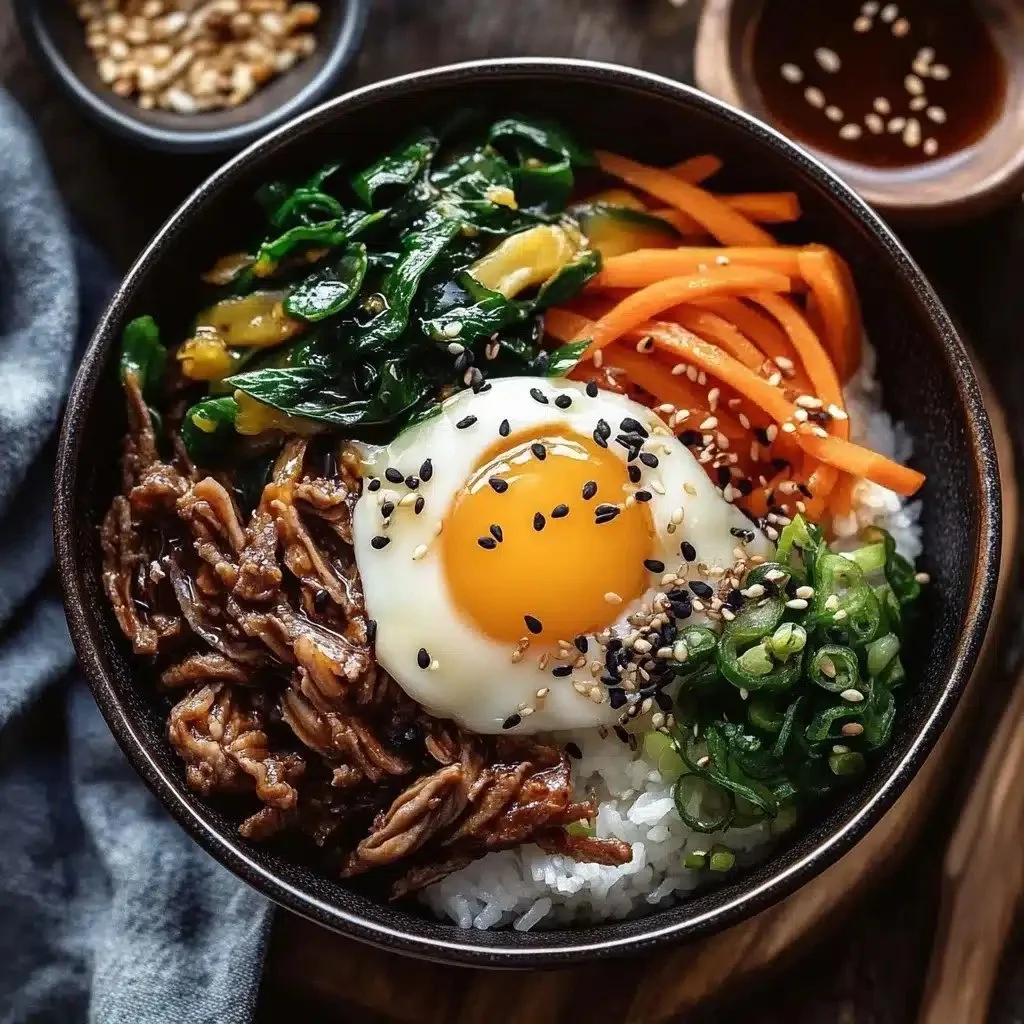
There’s a little magic in a bowl of Bibimbap. For me, it’s not just another meal; it’s a beautiful harmony of flavors, colors, and textures. This dish has a way of welcoming the senses, as I watch the sizzling vegetables dance in sesame oil while the fragrant rice fills the air with warmth. The first time I had Bibimbap, my friend took me to a tiny restaurant tucked away in a bustling street, where the aroma of spices wafted enticingly. As I took my first bite, I was captivated by how each ingredient sang on its own, yet together created a symphony that was nothing short of extraordinary. With this Easy Korean Bibimbap recipe, I invite you to recreate that experience at home, adding your personal touch to this vibrant dish.
Recipe Timing
- Prep Duration: 15 minutes
- Active Cooking: 15 minutes
- Total Duration: 30 minutes
- Portion Size: Serves 2
- Complexity: Simple
Nutritional Recipe
- Calories per portion: Approximately 480
- Protein: 16 g per serving
- Carbs: 65 g per serving
- Fats: 18 g per serving
- Fiber: 5 g per serving
- Sugars: 3 g per serving
- Sodium: 800 mg per serving
Why You’ll Love This Easy Korean Bibimbap
This dish is a delightful celebration of fresh ingredients and vibrant flavors. Each component can be tailored to your preference—use any vegetables you love or have on hand, making it a versatile option for any season. Plus, it’s a one-bowl wonder that brings everything together in a visually stunning presentation. The warm, fluffy rice topped with colorful vegetables and a perfectly fried egg is not only satisfying but also a feast for the eyes. And don’t even get me started on that kick of Gochujang! It adds a perfect spicy depth that elevates the entire dish.
The Complete Cooking Journey
Embarking on this culinary adventure is a joyous experience. Starting with perfectly cooked rice that serves as a comforting base, you’ll transform fresh vegetables into tasty sautéed pieces, each adding their unique flair. The thrill of setting everything together in a bowl and watching families or friends dive in will bring as much joy as it does flavor. Let’s take it step by step!
Ingredients:
- 2 cups cooked rice
- 1 cup spinach, blanched
- 1 carrot, julienned
- 1 zucchini, julienned
- 4 mushrooms, sliced
- 1 cup bean sprouts, blanched
- 2 eggs
- Gochujang (Korean red chili paste)
- Soy sauce
- Sesame oil
- Sesame seeds
- Green onions, chopped
Method:
Step 1: Cook the Rice
Start by cooking the rice according to package instructions, allowing it to become warm and fluffy while you prepare the rest of your ingredients.
Step 2: Blanch the Vegetables
In a pot of boiling water, quickly blanch the spinach and bean sprouts until bright green and tender, then remove them and set aside.
Step 3: Sauté the Vegetables
In a pan, add a splash of sesame oil and sauté the julienned carrots, zucchini, and sliced mushrooms until they’re tender and slightly golden.
Step 4: Fry the Eggs
For that perfect finishing touch, fry the eggs sunny-side up in a separate pan. The creamy yolk will be the crown jewel of your bibimbap!
Step 5: Assemble Your Bowl
Grab a bowl and start by placing a generous serving of warm cooked rice at the bottom. On top of that, artfully arrange the sautéed vegetables, blanched spinach, bean sprouts, and finally, the beautiful fried egg.
Step 6: Add the Finishing Touches
Drizzle soy sauce and sesame oil over the arrangement, sprinkle sesame seeds and chopped green onions for texture and flavor.
Step 7: Serve with Spicy Delight
For an extra kick, serve with gochujang on the side. Each bite will be a thrilling mix of spicy, savory, and fresh!
Serving Suggestions & Pairings
This Easy Korean Bibimbap pairs wonderfully with a light cucumber salad or a hot and sour soup. When entertaining, serve it family-style, allowing everyone to build their own bibimbap adventure.
Storage & Leftovers Guide
Leftovers can be stored in an airtight container in the fridge for up to 2 days. If possible, keep the fried egg separate until you’re ready to reheat to maintain that deliciously runny yolk.
Kitchen Wisdom & Success Tips
- Use leftover rice for an even quicker prep—just ensure it’s at room temperature.
- Feel free to mix in different protein sources like shredded chicken, tofu, or beef for added sustenance.
- Ensure your vegetables are cut uniformly for even cooking.
Flavor Variations & Adaptations
Want to switch it up? Try adding kimchi for a fermented kick, or toss in a handful of seasoned seaweed for a savory touch. Swap out vegetables based on the season or your personal favorites—bell peppers, broccoli, and snap peas all work wonderfully.
Reader Questions & Solutions
-
Can I substitute white rice with brown rice?
Absolutely! Just note that brown rice will need a bit more cooking time. -
What can I use instead of Gochujang?
If you’re in a pinch, Sriracha can work, but it won’t give the same depth of flavor. -
How can I make this vegetarian friendly?
This recipe is already vegetarian! Just be cautious with the type of soy sauce you choose—opt for a vegetarian-friendly brand if necessary. -
What’s a good side dish to serve?
A refreshing cucumber salad dressed with rice vinegar complements the rich bibimbap nicely. -
Can I meal prep this dish?
Yes! Pre-cook all components, but keep the rice and veggies separate until you’re ready to serve.
Wrapping Up
Cooking Easy Korean Bibimbap is more than just following a recipe; it’s about bringing together bright colors, exciting flavors, and the joy of sharing a meal with loved ones. I hope you dive into this culinary journey with excitement, creating your own unforgettable moments around the table. Each bowl will not only nourish your body but will spark a sense of fulfillment and happiness—one delicious spoonful at a time. Get cooking, and enjoy your creation!
PrintEasy Korean Bibimbap
A vibrant and flavorful Korean dish featuring rice topped with sautéed vegetables and a fried egg, finished with Gochujang for a spicy kick.
- Prep Time: 15 minutes
- Cook Time: 15 minutes
- Total Time: 30 minutes
- Yield: 2 servings 1x
- Category: Main Course
- Method: Sautéing
- Cuisine: Korean
- Diet: Vegetarian
Ingredients
- 2 cups cooked rice
- 1 cup spinach, blanched
- 1 carrot, julienned
- 1 zucchini, julienned
- 4 mushrooms, sliced
- 1 cup bean sprouts, blanched
- 2 eggs
- Gochujang (Korean red chili paste)
- Soy sauce
- Sesame oil
- Sesame seeds
- Green onions, chopped
Instructions
- Cook the rice according to package instructions, allowing it to become warm and fluffy while you prepare the rest of your ingredients.
- In a pot of boiling water, quickly blanch the spinach and bean sprouts until bright green and tender, then remove them and set aside.
- In a pan, add a splash of sesame oil and sauté the julienned carrots, zucchini, and sliced mushrooms until they’re tender and slightly golden.
- Fry the eggs sunny-side up in a separate pan.
- Grab a bowl and start by placing a generous serving of warm cooked rice at the bottom. On top, artfully arrange the sautéed vegetables, blanched spinach, bean sprouts, and finally, the fried egg.
- Drizzle soy sauce and sesame oil over the arrangement, sprinkle sesame seeds and chopped green onions for texture and flavor.
- Serve with gochujang on the side for an extra kick.
Notes
Use leftover rice for quicker prep. Feel free to mix in proteins like chicken, tofu, or beef.
Nutrition
- Serving Size: 1 serving
- Calories: 480
- Sugar: 3g
- Sodium: 800mg
- Fat: 18g
- Saturated Fat: 3g
- Unsaturated Fat: 15g
- Trans Fat: 0g
- Carbohydrates: 65g
- Fiber: 5g
- Protein: 16g
- Cholesterol: 186mg